
History At The Levels School
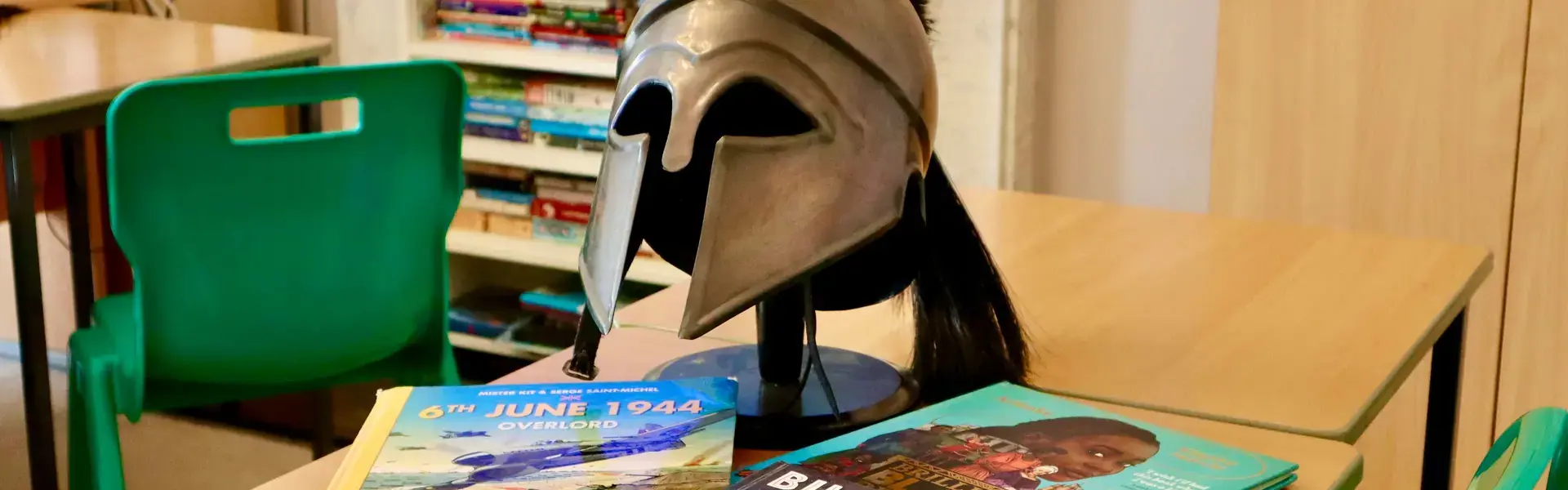
The history curriculum at The Levels School incorporates a mix of breadth and depth studies. The National Curriculum has been adapted to suit the needs and interests of the students, incorporating more chronological skills, cross-curricular links, and links to the GCSE curricula.
This will empower students with the confidence to access GCSE history as well as providing a good foundation of general historical knowledge for students who opt not to take history after Year 9. It is taught as interconnecting stories to aid in recall and to fire the imagination through a variety of media and means.
In addition to The Levels School’s core values and skills, we aim to develop these specific skills in history:
- Chronology
- Cause and consequence
- Change and continuity
- Sources
- Interpretations

Prep
History gives us a sense of identity. It is about real people who lived, and real events which happened in the past. Through our history curriculum we want our pupils ‘to gain a coherent knowledge and understanding of Britain’s past and that of the wider world. Pupils learn about the major issues and events in the history of their own country and of the world and how these events may have influenced one another. History fires the pupils’ curiosity about the past in Britain and the wider world and plays an essential part in preparing them for living and working in our current times. Studying history will help the pupils to understand the values of our society and the range of human achievements and aspirations. They will develop the skills to ask perceptive questions, think critically, evaluate evidence and develop their own thoughts and opinions. It will enable the pupils to understand the relationship between different groups, their own identity and the challenges of their time.
Key Stage Three
| Year 7 | Year 8 | Year 9 | |
|---|---|---|---|
| Autumn Term | Roman Britain | The Great Reformation & Elizabethan England | The Transatlantic Slave Trade |
| Spring Term | Norman Conquest & Norman England | The Industrial Revolution | The Holocaust |
| Summer Term | King John | World War One | Jack the Ripper |
GCSE
At The Levels School, history is an option which any student may choose to take at KS4. We offer Edexcel GCSE History (9-1), which is a challenging but immensely interesting and rewarding course. The GCSE contains four units which are all assessed at the end of Year 11 in three exam papers as outlined below.
| Paper 1 |
|---|
Thematic Study & Historic EnvironmentThis paper contains two sections. The main section (worth 20% of the total GCSE) is a thematic study of crime and punishment in Britain from the year 1000 to the present day. The second section (worth 10% of the total GCSE) is a depth study of the historic environment of Whitechapel during the Jack the Ripper period, 1870 - 1900. |
| Paper 2 |
Period Study & British Depth StudyThis paper contains two sections. The first section (worth 20% of the total GCSE) is a depth study of British history, focusing on the reigns of King Richard I and King John. The second section (worth 20% of the total GCSE) is a depth study of world history, focusing on British America in the build-up to and duration of the American Revolutionary War. |
| Paper 3 |
Modern Depth StudyPaper Three is a skills-based paper focusing on the skills of source analysis and interpretations. Worth 30% of the total GCSE, students will study Germany in the inter-war years, 1918 - 1939. They will examine the problems in Germany at the end of World War One, the cultural flowering of the 1920s, the rise of Hitler and the rule of the Nazi Party. |
External Links Prep-KS3
| Animated Videos | BBC Bitesize |
| Primary History | Horrible Histories |
External Links KS4
| Edexcel GCSE | BBC Bitesize |
| Seneca Learning | Documentaries |
Holiday Activities
If you're looking to support your child's history studies at home, try the following activities:
Reading historical fiction, such as "War Horse" by Michael Morpurgo.
Reading history fact books, such as the "Horrible Histories" series.
Watching history films, TV shows and documentaries. BBC iPlayer has lots of great documentaries, and many children's films have a historical element to them. Children love films such as "A Knight's Tale" and Disney's "Robin Hood". The "Horrible Histories" TV show is also available to watch on BBC iPlayer and Netflix.
Visit historical heritage sites. Shepton Mallet Prison and Glastonbury Abbey are both fascinating local history spots. The National Trust and English Heritage websites highlight lots more local sites for the whole family to enjoy. You can also go visit free sites, such as the fort at the top of Brent Knoll!
History home crafts are a great, practical way for children to learn more about history. Why not build a fort out of pillows and blankets, a castle out of cardboard or decorate a cake in the style of the Georgians?
Talk to older family members. Children are often fascinated by their own family history. Many members of your family may have lived through incredible events, such as the Cold War, 9/11 or the Millenium. Your child could even conduct an oral history report by interviewing a family member about a particular historical event that they remember.